


Full-stack network inventory software
for telecom operators
VertiGIS
ConnectMaster
BOOK A SOFTWARE DEMO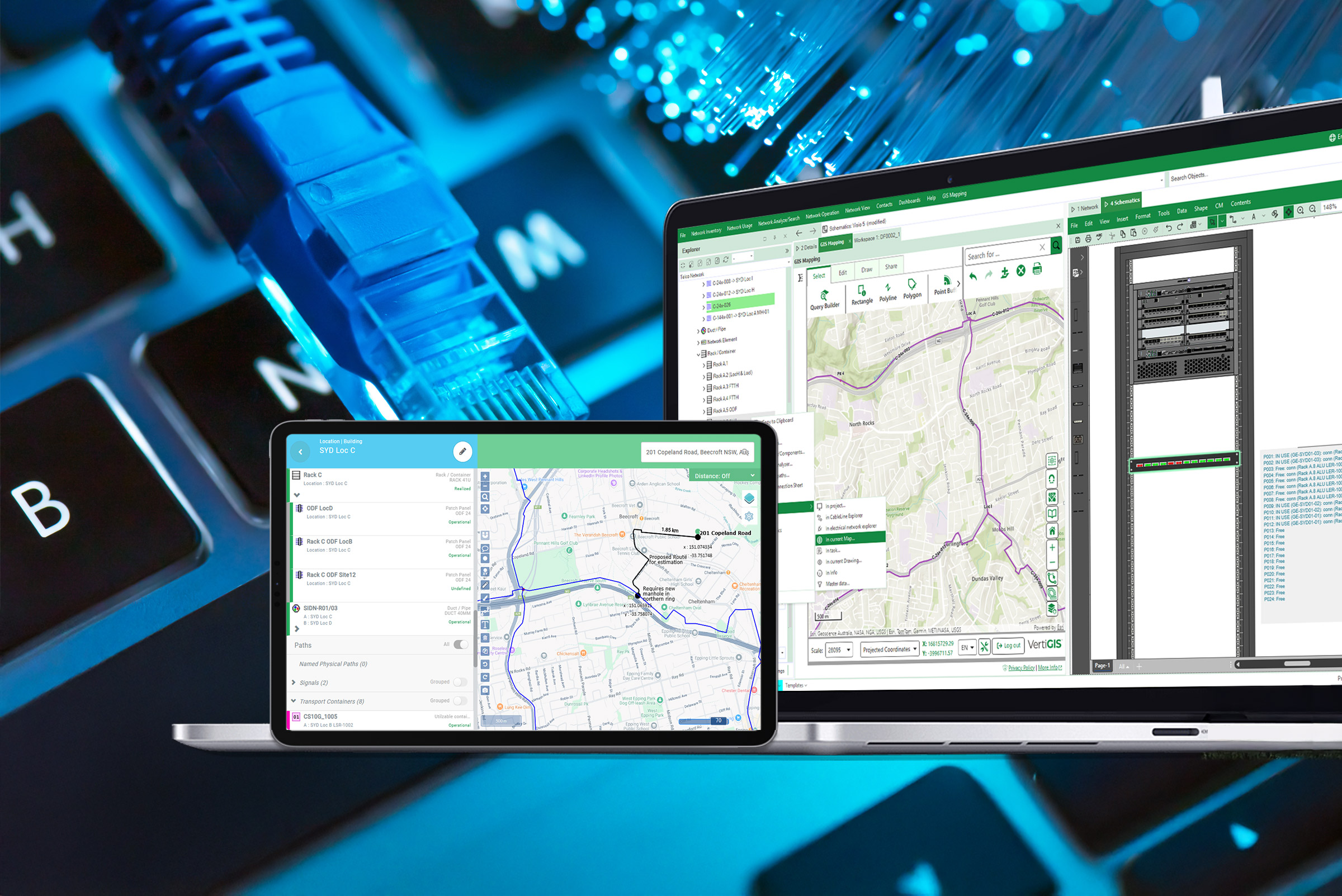
Software to plan, document and operate telecommunications networks — with full transparency, smarter design, and lower costs.
What is VertiGIS ConnectMaster?
VertiGIS ConnectMaster™ is the single source of truth for telecom networks — unifying design, documentation, operations, and analytics in one software platform. Built for telecommunications operators, it delivers complete visibility across all network layers.
Why Choose VertiGIS ConnectMaster?

Cost savings
Reduce project costs by comparing multiple planning scenarios and choosing the most efficient design.

Smarter planning
Automate network design with rule-based planning to accelerate rollouts and improve accuracy.

Operational efficiency
Boost incident, problem, and change management with simulation tools that keep networks running smoothly..
Product Offering


Customer Testimonials






Tailored GIS Solutions for Every Industry
Trusted by a wide range of industries, VertiGIS Studio lets organizations create smart, purpose-built solutions that align with their sector-specific goals, offering the flexibility and tools needed to deliver impactful results.
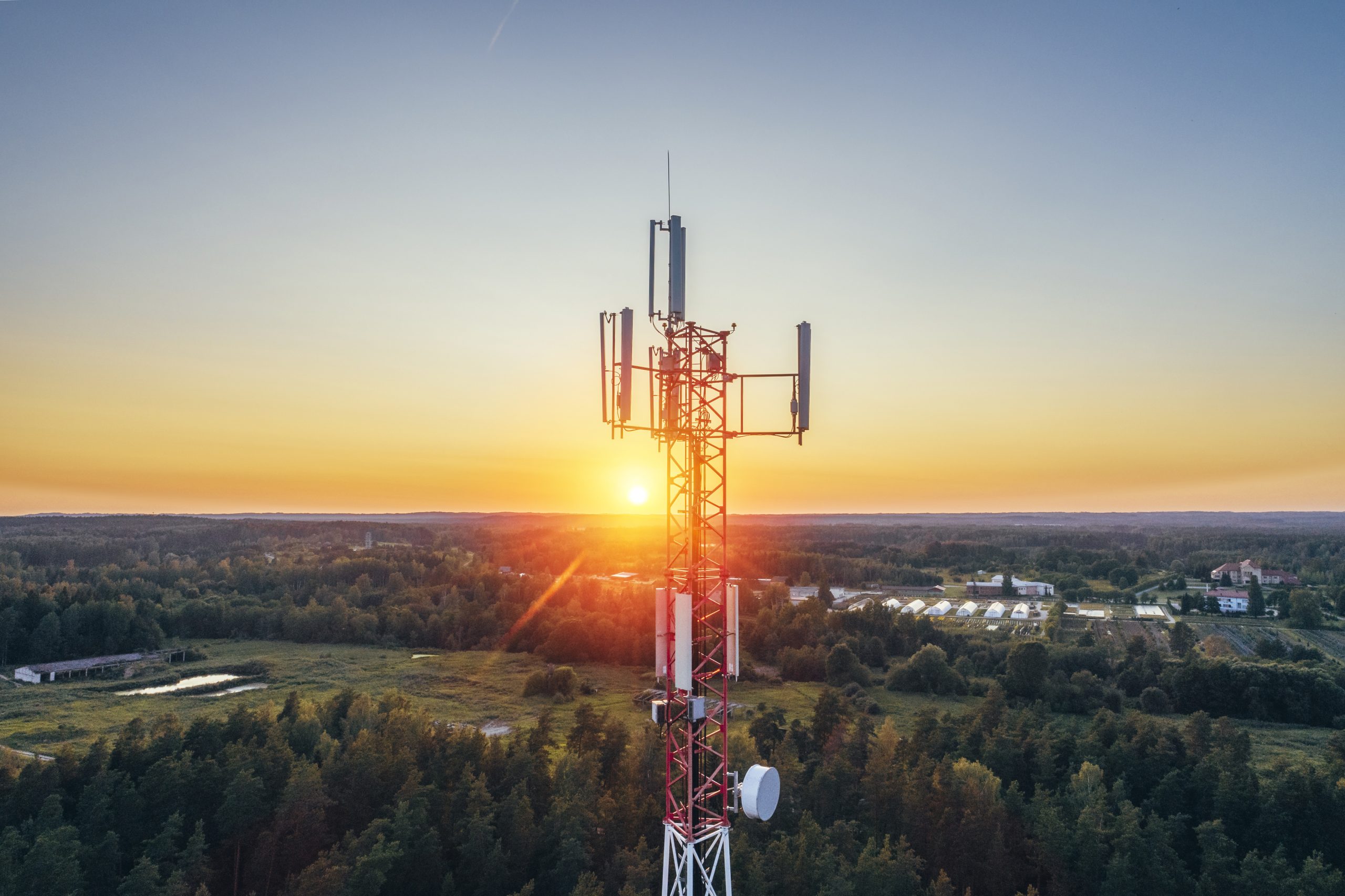
Deliver reliable telecommunications services faster. VertiGIS ConnectMaster helps telecom operators manage backbone, distribution, and access networks — cutting costs, improving time to market, and ensuring operational efficiency.
BOOK A SOFTWARE DEMO

Keep the lights on and the gas, water, and heat flowing. VertiGIS ConnectMaster manages copper- and fiber-based telecontrol networks that connect remote stations with control centers, ensuring continuity and resilience for your core business.
BOOK A SOFTWARE DEMO

Keep transport networks safe and efficient. From highways and railways to airports and harbors, VertiGIS ConnectMaster manages copper- and fiber-based telecontrol networks that connect remote stations with control centers, ensuring availability and security.
BOOK A SOFTWARE DEMO

Keep your industrial processes running. VertiGIS ConnectMaster manages telecom networks that link distributed sites with central control systems — ensuring reliable and cost-efficient telecontrol services.
BOOK A SOFTWARE DEMO
Related Story
Telecom network modernization
Written by Luke SullivanHead of Pre-Sales, Telecommunications Business Unit, VertiGIS . . Why Evolving What Already Works Beats Starting Over . Telecom networks never stand still. Over the last few Read More

Related Story
The Hidden Drivers of FTTH ROI
Written by Buddie CeronieChief Commercial Officer, VertiGIS Group & Global GM Telecommunications . . What a Recent Industry Webinar Reveals About the Real Drivers of FTTH ROI . I recently Read More
Related Story
Why Mobile GIS Must Evolve Beyond Maps and Data Collection
Written by Cam BarnardProduct Director, VertiGIS . . VertiGIS Neo solutions enable organizations to bring data, workflows, and decision-making closer to the field Executive Summary Mobile GIS is undergoing a Read More
Related Story
AI-Powered Geospatial Intelligence
Written by Michael Schlagel VP of Sales Americas, VertiGIS . . In an Industry Defined by Expansion, Integration, and AI, Data Quality Has Become the Competitive Advantage The telecom industry Read More
Related Story
AI-Powered Geospatial Intelligence
Written by Drew Millen Chief Technology Officer at VertiGIS . . Empowering more users to make better decisions by reducing complexity and increasing organizational agility Executive Summary: AI is reshaping Read More
Ready to Harness the Power of Your Spatial Data?
Discover our software solutions
Our experts will help you solve your industry-specific challenges.
Tell us a little about yourself and we will be in touch with you soon!
FAQs
VertiGIS ConnectMaster is a software solution with more than 30 years of proven industry experience and around 160 customers worldwide for the planning, documentation, management, and analysis of telecommunications networks. It serves as a central data platform for network operators who need to manage physical network assets, logical services, and operational information within a single integrated system.
VertiGIS ConnectMaster is designed for telecommunications providers, utility companies, and operators of complex infrastructure networks. It is particularly well suited for organizations that need to reliably document and operate fiber- and copper-based communication networks.
VertiGIS ConnectMaster supports fiber network planning with intelligent assistants, rule-based automation, and cost calculation tools for FTTx projects. This enables network operators to compare multiple planning scenarios and identify more efficient and cost-effective rollout strategies.
Centralized network documentation creates transparency across network components, connections, services, and dependencies. Especially in growing or historically evolved networks, it helps prevent information from being scattered across departments, spreadsheets, or isolated systems, creating a reliable foundation for planning, operations, and decision-making.
Yes. VertiGIS ConnectMaster documents both physical network inventory — including components, fibers, cables, ports, and connections — and logical services such as transmission, routing, switching services, and IP addresses. This provides a unified view of infrastructure and services.
VertiGIS ConnectMaster supports network operations through detailed end-to-end visibility of physical and logical network services, simulation of planned outages, identification of single points of failure, and network utilization analysis. These capabilities help operations teams better assess impacts and make more informed decisions.
VertiGIS ConnectMaster can use OTDR measurement data to determine fault locations along a fiber optic route and map them onto the real network infrastructure. The measured fault distance is correlated with the geographical path of the connection, making disruptions traceable not only technically but also spatially — for example directly on maps or within the network model. This enables faster fault isolation and more efficient issue resolution during network operations. Also, FMON-systems (Fiber Monitoring) can be connected to ConnectMaster and alarms can be processed quickly.
VertiGIS ConnectMaster supports structured workflows, automated attribute population, and guided processes for complex network connections. This reduces manual input, improves data consistency, and helps new team members handle recurring tasks more efficiently. On site, changes in patching can be documented immediately via the ConnectMaster Online app.
Yes. VertiGIS ConnectMaster offers integration and data exchange capabilities with existing GIS, OSS, and BSS environments. It also supports APIs and automation technologies such as SOAP, REST, and .NET for accessing and managing network data. A DSE (Data Synchronization Engine) is available specifically to interface with NMS (Network Management Systems).
GIS plays a central role by enabling network assets to be visualized, edited, and analyzed geographically. VertiGIS ConnectMaster combines geographic, schematic, and tabular views so teams can understand network structures spatially while maintaining detailed technical documentation.
VertiGIS ConnectMaster provides a shared data foundation for all stakeholders. Planning, documentation, and operations teams work with the same up-to-date network information. Field staff can access network data with mobile devices on-site, capture changes, and synchronize updates directly back into the system, ensuring all teams work with consistent information.
VertiGIS ConnectMaster is designed as a flexible platform and can be deployed both in cloud environments and on-premises. The solution supports various deployment models and can be adapted to individual IT strategies. In addition to desktop a mobile web client is available, allowing users to work flexibly according to their specific use cases.
ConnectMaster is highly scalable in terms of network size, number of users, and functional scope, ranging from small installations to very large enterprise deployments. This scalability is also reflected in its flexible, demand-based pricing model. The platform grows with organizational requirements and delivers stable, reliable performance even when handling large volumes of data and supporting a high number of users.
ConnectMaster ensures IT and data security through a defense-in-depth architecture combining federated identity, strong authentication (SSO/MFA), fine-grained access control (RBAC/ABAC), secure APIs, encrypted communications, and advanced database-level protections such as row-level security, labeling, and redaction. These controls are reinforced by comprehensive auditing, centralized data governance, and flexible deployment models aligned with enterprise security standards.
Yes. VertiGIS ConnectMaster can be introduced alongside existing systems, allowing data to be migrated step by step while processes are transitioned without interrupting ongoing network operations. The migration process follows a structured approach — from the analysis and cleansing of existing data to iterative testing and final validation — ensuring high data quality while minimizing risks.
Yes, a migration from Ericsson Network Engineer to VertiGIS ConnectMaster is fully possible and is supported by a specialized VertiGIS migration team. This team brings extensive expertise from Ericsson Network Engineer implementations, as well as decades of combined experience with both systems and real-world migration projects. This ensures a structured, low-risk transition with high data quality and proven practical expertise throughout the migration process.